Archive for the ‘Avid’ category

MC5 Rides Again

June 2, 2010

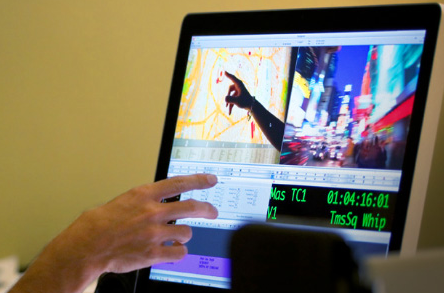
Media Composer 5 will be released a week from tomorrow, and without question, it represents the biggest upgrade Avid has offered in years — since the last version 5, to be exact, way back in 1994, when the modern Media Composer was born. The symmetry is the result of Avid resetting its numbering scheme in 2003. So here we are at version 5 again. Five was — and is — a very good number for Avid. I can still remember the cheering at the user group meetings. I wouldn’t be surprised if we see that same excitement this time.

This version brings timeline changes that should appeal to the Final Cut Pro crowd and that arguably go FCP one better, making it easy to grab-and-drag in the timeline without monkeying with a tool palette. That’s because Avid’s new tools are smart, and let you select a segment or a transition or a keyframe without a trip to the toolbar. You can also stay in what used to be called Segment Mode and move around without losing clip selection.

Other changes include realtime audio effects, stereo tracks and clips, advanced keyframes for most visual effects and automatic image stabilization. And, of course, Quicktime AMA, which means that you no longer have to import and transcode Quicktime materials. Not every format is equally responsive, but with the right codec and the right hardware you won’t need to import. Red (R3D) material is handled natively, too, along with Canon DSLR material.

Meanwhile, Avid has blessed a Matrox box as a low cost monitoring solution, and announced a software developer kit for other hardware manufacturers, which means that one of these days there will probably be a choice of non-native hardware offerings for Avid folk.

And, of course, there’s the student price of just $300 for the full version, with four years of free upgrades. And a 30-day downloadable free trial for everybody else.

All in all, this is an exciting time for Avid. I’ve been beta testing the new version and working full time on a new Media Composer book, titled Avid Agility.  With luck, it’ll be available on Amazon by mid-July. I hope you’ll find it essential reading.

Meanwhile, I’ll be demoing MC5 at the LA Final Cut Pro User Group, on Wednesday, June 16 at Barnsdall Park.

It’s only the 2nd of June, and already it’s shaping up as a very interesting month.
Apple Said to Aim FCS at Prosumers

May 18, 2010

AppleInsider is running a story that indicates Apple is re-targeting Final Cut Studio at home users and prosumers. The company has posted two job openings: for a Senior Visual Interface Designer and a Senior Human Interface Designer, both for Pro Apps. Key quote: “Apple’s Professional Applications Design Group is seeking a passionate senior human Interface designer who also understands the intricacies of non-linear video editing.” The remainder of the posting might imply that they are planning a wholesale reexamination of the FCP UI.

Not much hard evidence, but tantalizing, to say the least.

Apple scaling Final Cut Studio apps to fit prosumers

Software that Says Come Play With Me

May 11, 2010

I had occasion to become familiar with Lightroom recently. A friend loaned me a Canon 5D and I wanted to look at the raw files I was making. Adobe is running a public beta for Lightroom 3 and I downloaded it. What a slick piece of work. The first time you use it, overlays appear above the interface explaining how it’s organized and giving you enough information to get started. Large buttons for basic functions point to Adobe’s confidence that they know what you want to do — and in my case they were right. And the program itself? Fast, stable, powerful — and beautiful. And still in beta. I was able to go through my images, rate them, color correct them and create a nice web site, without so much as cracking a manual.

Adobe is doing some really nice work. I’m using InDesign to create my upcoming book and it is a model for clean, attractive and powerful software design. And they’re really focused on educating the user base. The help system, for example, links you to online videos explaining various features, in a consistent interface, but done by independent designers and trainers.

As more and more powerful software gets into more and more creative hands a focus on training like this becomes essential for users and for companies, alike.

The Zen of Trim

April 20, 2010

I had an interesting debate with a music editor friend the other day. Frustrated (as we all are) with the hoops you have to jump through to move material back and forth between Media Composer and Pro Tools, he suggested that MC simply start using Pro Tools as its audio engine. And not just the engine — the whole UI. MC just synchronizes with PT. End of story.

I completely agree with the need to move sequences/sessions and media back and forth without conversion. But much as I envy the Pro Tools toolset (as I describe in this post), I don’t want to rely on the PT interface. Why? Because I’d have to give up Trim Mode.

My friend wouldn’t have it. “I can do anything you can do,” he insisted. I tried to explain that he can’t trim while watching picture or listening to sound. He said he didn’t need that — he just drags things around and hits play to check the work. Or he trims using PT’s trim tool. No problem staying in sync.

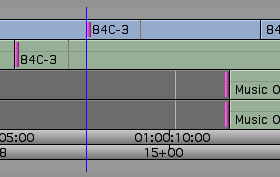
I wasn’t making any progress, so I finally pulled out the laptop and made a single dialog cut. My point was this: Most of my cuts are overlapped. When I adjust picture, I usually want to adjust sound somewhere else to stay in sync. With MC, I can trim all parts of an overlap while playing and watching any one of them. When I stop, I’m done. The ability to see realtime video while the cut is made, and to observe what’s happening at any part of the cut, audio or video, a-side or b-side, while keeping everything else in sync, is something I can’t get anywhere else. Not to mention the ability to do asymmetrical trimming, or trim two heads or tails, slip or slide, etc., all while watching, or listening to, any portion of the cut.

I had to show it to him three times. Each time he scratched his head, thought for a minute, and said, “well, I can do that, too.” And I kept insisting that he couldn’t. Finally, on the third go-round, came the reply, “Lemme see that again.” And then, finally, “Wow — I guess that IS pretty cool.”

His conclusion? Digi should add a trim mode and then Avid could merge the two UIs. My conclusion? Video and audio editors need different tools.

The discussion also gave me new insight into the other major editing applications, and how difficult it is to explain the power of Avid’s trim model to somebody who’s never really used it. I know, I know — plenty of people have switched from MC to FCP and have never looked back. But for a lot of us, trim mode is the holy grail. If I had to, I could work without it — I just don’t ever want to.

NAB in the Rear View Mirror

April 19, 2010

What a difference a couple of years makes. Avid (and Media Composer 5) picked up several awards at NAB, including a Videography Vidy award, a Pick Hit from Broadcast Engineering, and a Star Award from TV Technology. Not bad for a company that a lot of people thought was moribund a few years ago. Apple, of course, was a no-show at NAB, and the Final Cut community seems to be taking notice. Here’s a quote from the Los Angeles Final Cut Pro User Group forum: “I hope Apple takes this as a wake up call. Because Avid is making FCP seem like the Media Composer of five years ago…”

Oliver Peters offers a great summary of post production-related NAB news on his blog here. I was intrigued to see that some of the new digital cinema cameras generate both raw files and either DNX or ProRes simultaneously. We thought the lab would end up in the editing room. Maybe it’s actually going to end up in the camera. And later this year, it looks like Lightworks is going to have a new life as a free download, with the code released to the open source community. The modern Lightworks has plenty of useful features, not the least of which is background saves. And it can edit both ProRes and DNX without transcoding. Don’t count them out yet. Meanwhile, as I’ve mentioned  previously (here and here), Premiere might be morphing into a legitimate contender.

Not long ago it looked like the editing software wars were nearly over. Today, the playing field is a whole lot more level — and exciting.  This is how it’s supposed to work. Competition drives innovation — in economics, and in evolution. And we, the editors, win.

Dede Allen

April 18, 2010

Dede Allen, one of the seminal figures in editing for nearly a half century, died Saturday of a stroke. She was the first editor I ever met, and she was partly responsible for my choice of career. I will miss her — her inspiration, her intelligence, her wisdom — more than I can say. The LA Times Obituary credits her with making editing an art coequal with cinematography. Whether that’s true or not, her influence has been pervasive.

Mia Goldman did a wonderful interview with her for the Editors Guild Magazine back in 2000 (when I was the magazine’s editor). She had just cut her first picture with an Avid, “The Wonder Boys,” after finishing a stint as an executive at Warner Bros. The interview is still online, and it shines a unique light on her point of view: Part 1, Part 2.