
The iPhone and Multi-Touch

Posted January 11, 2007 by Steve
Categories: Avid Wish List & Bugs, User Interface

iPhone Touch Screen The months of rumors are over, the iPhone has been revealed, and once again it looks like Apple has created a game-changer. Steve Jobs was reported to be more excited over this device than anything since the original Mac, and despite the obvious marketing hyperbole in such a statement, the parallels between the first Mac and the iPhone are pretty strong. Both represent a new platform — the iPhone is really a portable, Internet-connected, telephony-enabled Mac — and both represent the first commercialization of a powerful user-interface technology that was previously seen only in research labs. It’s that last bit that people are raving over.

The original Mac was the first wide-scale deployment of a mouse-based interface. The iPhone is the first wide-scale use of multi-touch technology, where the screen pays attention to multiple contact points and understands gestures.

The original Mac was so much more fun to use than a PC — and the iPhone’s gestural interface seems awfully engaging, in much the same way. Both devices connect with more of your nervous system than anything that came before. There’s a tighter feedback loop between what you do and what it does. Our vocabulary for this kind of thing is pretty limited, but what people inevitably say is that such a device feels good to use. It’s more intuitive because it does a better job of responding to your input.

The iPod, with its touch-sensitive scroll wheel also represented a new way to interact with a device, and you could argue that a big part of its success was due to that interface.

I hope that we see a wider popularization of multi-touch input devices in digital media applications soon. We’ve been interacting with our editing systems for a long time and there just hasn’t been much excitement in terms of feel for a long time. We’re due.

For more about what a big-screen multi-touch interface might look and feel like, check out my previous post on the subject.
The Uses of Distraction

Posted January 8, 2007 by Steve
Categories: Media and Society, Quality of Life

We think of motion media and advertising as two sides of the same coin, but they were not always wedded together. In the first part of the 20th century, when you went to the movies, you paid for a ticket and you sat in a theater blessedly free of commercials. Television changed that implicit contract for technical reasons — there was no way to know what you were watching and thus no way charge you for it. The result was the concept of “sponsorship,” and we’ve been living with that advertising model for a good half-century now.

Many people have tried to understand what the television revolution in the ’50s and ’60s did to us. Some of the most interesting work was done by teachers. In the early ’80s they began to see that the kids coming into their classrooms couldn’t do the same work that a previous generation could, couldn’t pay attention in the same way, couldn’t concentrate as well. They busily adjusted their curricular materials and dumbed down their tests to make it possible for a new generation to get through the school system. (For details, check out Jane Healy’s book “Endangered Minds,” which includes sobering samples of the old and new tests.)

Today, the average kids sees 20,000 TV commercials — per year. The average adult will see 2 million commercials by the time they are 65. We like to pretend that these things don’t affect us. But advertisers aren’t spending all that money for nothing.

Now it turns out that this was only the beginning. Two trends are going to make TV commercials soon look positively quaint: Internet-delivered video-on-demand and portable flat-panel screens. The combination is going to produce a media environment of unparalleled power. Every surface, every billboard, every bus ad, every wall in a supermarket, restaurant or doctor’s office, and of course, every phone or music player, will be capable of displaying moving video. Every minute of your life can and probably will be interrupted with commercial messages.

I’d like to coin a term for this new advertising environment: “ubiquitous embedded media.” One of the criteria for ads has always been how “compelling” they are — do they command your attention. By that metric, ubiquitous media is a home run out of the park.

TV ads work because they hook into primitive neural reflexes. One such reflex is designed to make you instantly pay attention to anything that moves; another makes you pay attention to new things, to novelty. It’s easy to see how these two traits would be important in helping you survive in the jungle. But with screens of all sizes glued to every surface around you, those reflexes are going to give advertisers more power than ever before to grab your attention and hold it.

A long time ago, advertising was about information. But today, the job of advertising is primarily to distract: to cut through the constant barrage of media clutter, to make you stop paying attention to whatever it is you’re paying attention to and look at the ad instead. In television, we see a proliferation of flash cutting. It seems like nearly every cut in daytime TV is punctuated with a white flash. What are they for? Simply to make you look. Ads on the Internet go even further. The latest ads for Yahoo jiggle constantly. It’s almost impossible to avoid looking at them.

What is this constant barage doing to us? Nobody knows yet. The fish doesn’t understand the ocean it swims in. But there’s a growing consensus in this country, especially among parents, that commercialism has gone too far, and there’s a nascent anti-commercial movement springing up to take action about it. (If you want to know more, a good place to start would be the excellent Commercial Alert web site.) My prediction? The more that advertising pushes into every nook and cranny of our lives the more people are going to push back.

Avid on Mac-Intel Beta

Posted January 8, 2007 by Steve
Categories: Avid

According to an article in AppleInsider on Saturday, sources are saying that Avid will announce an open beta program for Mac-Intel products today. The idea is that if you already have a license for Adrenaline, Media Composer Software Only or Xpress Pro, then you’ll be able to download and use the Intel beta.

This comes on the heels of an Adobe open beta program for Photoshop CS3, which operates in much the same way — licensed customers only.

Avid had originally announced that Mac on Intel products would be shipping by the end of 2006 or in early 2007. Betas were demoed at DV Expo in November and one person I know who briefly played with MC-software at the show said it was surprisingly fast and responsive.

The announcement could have benefits for the long-form community, which has been underrepresented in Avid’s testing program for a long time. Beta in Hollywood has usually meant, at best, a couple of shows, or perhaps a system or two running at a rental company, and bug-fixes have been slow to materialize. If individual editors sign on to this program and give Avid articulate feedback we might see some real change in areas are important to us.

If the announcement is made as the story predicts, I hope A.C.E. and Editors Guild members will participate.

Video Games

Posted January 5, 2007 by Steve
Categories: Avid, Avid vs. Final Cut, Avid Wish List & Bugs

jeff_han_image.jpgComparing the new Sony PS3 and Nintendo Wii game players has become commonplace in the computer press now and for good reason. It’s always fun to see the mighty felled. I haven’t used either of these things, but the PS3 is about as high-tech as Sony could make it with fantastic graphics and a Blu-ray disk player. The Wii is far less expensive and can’t compare on the graphics. But it has one truly unique feature that’s got a lot of gamers’ attention: its controller is motion sensitive. So to play the tennis game, you actually swing the controller around and it registers your movement in space and reproduces it on screen. It’s so compelling that Nintendo recently recalled the straps on the controllers because people were using them so hard they broke.


The more sensory modalities a digital system can connect to, the better it is. A mouse with its two dimensional interface did this a lot better than an old PC running DOS and that’s one reason why the Mac was so much more fun to use.

We’ve been using a mouse-based graphical user interface to edit with for a long time now and it has proved itself remarkably flexible and resilient. You can control just about anything you want with it. The Ediflex light pen, the Lightworks controller and the Avid MUI all seem inflexible by comparison.

As I’ve mentioned before, it seems ridiculous that with the processing power we have that we need to stop video in order to make a change. But more to the point, it ought to be possible to manipulate the interface in more organic ways.

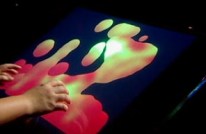
Here’s an example of something that’s possible today. It’s an interface that can sense multiple touch points on a screen, so you can manipulate it using your hands. It’s so intuitive that there’s almost no interface needed. It comes from a guy named Jeff Han, working at New York University’s Courant Institute of Mathematical Sciences and you can see a video demonstration here. The demo is so compelling that the audience breaks out in spontaneous applause many times as they watch. Take a look and tell me whether you still think your favorite editing system is up to date.

All The King’s Men

Posted January 5, 2007 by Steve
Categories: Quality of Life

I just read a two part article in CinemaEditor Magazine about the editing of the original “All the King’s Men.” Written by the editor, Robert Parrish, who passed away in 1995, it offers a vivid look at studio politics in the late ’40s, and the way pictures can be changed in editing. It only covers the short period between the film’s disastrous first preview, when Parrish was brought in to save it, and picture lock, but maybe because it’s so compressed, it makes a great story. Unfortunately, it’s not available on line, but if you’re a subscriber and you missed it, you owe it to yourself to check it out. Part 1 is in the 2nd quarter, 2006 issue. Part 2 is in the current, fourth quarter issue.

More Work/More Skills/Less Money?

Posted December 21, 2006 by Steve
Categories: Editors Guild, Quality of Life

I’m starting to wonder whether we aren’t in the middle of another big technical revolution, this time not driven so much by post, but by production and distribution. Our switch to digital is a done deal, but theirs is just getting started, moving us to a pure digital workflow all the way from camera to theater, DVD and Internet. That means another big learning curve for us, another pig in the python that we have to digest.

Post Magazine does its year-end wrap up in their December issue. Some of the points mentioned include:

  • More and more people are working with their own gear.
  • Editors are doing more compositing, titling and color correction.
  • We’re seeing more HD materials in the cutting room.
  • We’re seeing more disk-based formats, with no film or tape anywhere.
  • Production is shooting more and circling takes less.
  • Editors are being asked to take responsibility for archiving and versioning.
  • It’s soon going to be possible to edit at 2K resolution.

Some of this won’t seem particularly surprising to folks in the independent world, but for feature and TV editors in Hollywood it represents a sea change. More than ever before, we’re being forced to become generalists. It’s almost as if the jobs of editor and assistant and post supervisor are starting to merge, at least at the edges, and frankly, though the article doesn’t mention it, it looks like this is happening along with increased downward pressure on wages.

I do a new show every nine months or so and lately it seems like each one embodies an entirely new workflow. The pace of change is accelerating. I hope we can all embrace it and use the new tools to enhance the things we love about our craft, because it looks like there’s no stopping this thing and it sure doesn’t seem like it’s going to slow down any time soon.