Archive for the ‘Avid vs. Final Cut’ category

NAB – 2nd Impressions

April 18, 2007

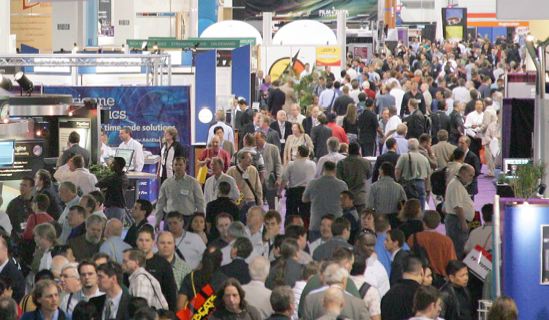
Nab Show FloorThe smoke has cleared a bit and I’m left just a wee bit underwhelmed by this year’s NAB. Full disclosure — I wasn’t able to go, so I’m commenting from the sidelines.

Apple and Avid both made some big announcements. Apple introduced Color, Final Cut Server, and a new, relatively high bitrate, compressed HD format. And it took the wraps off some significant improvements to Motion and Soundtrack Pro. Final Cut went to version 6 with an “open timeline” where you can mix and match formats and framerates.

Avid introduced an improved Unity product at a significantly lower price point, along with ScriptSync and DNxHD 36. It also offered a new and surprising commitment to open standards.

What strikes me about all this is how similar the two companies’ strategies are now. Both offer compressed HD formats, both have file sharing solutions, both offer a media asset manager, both have timelines that can mix and match different formats, both allow you to do useful work with a stock computer or a laptop, both provide a suite of applications, both profess to be based on open standards (though how that works out in practice remains to be seen). More than ever before, Avid and Apple are leapfrogging and copying each other.

The differences are in the details. Final Cut Studio provides much more breadth in terms of the applications offered, and the programs are tightly integrated. But Final Cut Server, which looks like a nice and inexpensive media asset manager, can’t do the most basic thing I need, which is to share bins. ProRes 422 and DNxHD now compete, but in different ways. Avid offers a 36 Mbps codec, which is about as light as you can get. But at higher bit rates Apple says you can still run an impressive 14 simultaneous streams of 720P/24 material on an 8-core Mac Pro (details).

Most disappointing to me, neither company made major changes to their core applications. Apparently they’ve both decided that their editing UIs are good enough. But that’s where I live all day long and there’s plenty in Media Composer that seems old and antiquated. Final Cut was built more recently and tends to feel a little more modern, but it has many weaknesses, too. It badly needs a better media manager, a better way to resync clips, and an improved trim module. Both companies seem to be influenced by facility people who aren’t close enough to the editing interface to recommend changes of this nature.

All that said, I’m excited by Color and I find the Final Cut ecosystem very appealing. On the Avid side, if Media Composer 2.7 offers good and stable performance on a laptop it might be the release that finally convinces a lot of Meridien users to switch. And many of my friends have been talking about ScriptSync, so I’m starting to think it might catch on.

Either way, it seems like the future of “offline” editing is high definition. I fully expect that I’ll be cutting with DNxHD 36 very soon. In fact, it seems like we’re going to have to come up with some new terms for this. Offline just doesn’t mean what it used to. At the top of the editing world we’re still going to see a distinction between editing from dailies and finishing. But the old idea that offline meant fuzzy and low-res just ain’t true anymore.

Technorati Tags: , , , ,

Apple’s Announcement – First Impressions

April 15, 2007

nab-stage.jpgToday’s Apple event at NAB was heavily anticipated and turned out to be a real blockbuster. Updated versions of most of the major applications in FCP Studio were demoed and many represent breakthroughs either in capability or price or both. The company showed off a new media asset manager and collaboration tool called Final Cut Server, and it revealed a new color correction application, Color, included in FCP Studio.

Final Cut:

  • Multiple resolutions in same timeline
  • Multiple frame rates in same timeline
  • Support for a new compressed HD codec, called “ProRes 422,” via a $3,500 hardware encoder and breakout box from Aja called the “I/O HD”
  • Much better integration with Motion

Final Cut Server

  • Media management solution for $1,000 (10 users) or $2,000 (unlimited)

Motion

  • New 3D tools
  • New tracking tools
  • Paint tools

Soundtrack

  • Tracks changes in a sequence imported from FCP
  • Full support for surround (5.1 treated as a single clip, complete pan controls)
  • Spectral editing (look at a spectrum graph and remove pieces of it).

Compressor

  • More presets.
  • Much faster encoding using 8-core Mac Pro

Color

  • Sophisticated and easy-to-use color correction via technology that was presumably picked up when Apple acquired Final Touch.
  • Included in Final Cut Studio

What we didn’t see:

  • Final Cut Extreme — many rumors predicted a 4K hardware/software finishing solution for $10,000. The demo talked about 4K support on a laptop, but I see nothing about this at Apple’s FCP site.
  • Changes or additions to the basic editing model (translate — better trim controls). I’m really bummed about this one.

Of course, it’s early days on all of this. We’ll have to see how it shakes out in the real world of editing rooms, which no NAB demo will ever reveal. And the announcement covered so much ground that all kinds of details were missing. But Apple is taking direct aim at Avid in several ways.

Final Cut Server is positioned against Avid Interplay at a fraction of the price. I/O HD takes on Adrenaline HD, again for much less money. ProRes 422 competes with DNxHD. Motion integration into Final Cut aces all of Avid’s antiquated title generation tools.

Soundtrack offers 5.1 mixing, something you have to buy a Pro Tools to get on the Avid side of things, and change tracking between FCP and Soundtrack is something Avid should have offered long ago. The new Color application gives Apple the lead in low-cost desktop color correction.

It’s been almost two years since Final Cut Pro 5 was released and a year since 5.1 added Intel support. In that time Avid should have been innovating aggressively. We’ve seen some valuable improvements, certainly, but the changes have been relatively conservative, presenting Cupertino with what amounts to a near stationary target in some areas — and Apple has responded very aggressively.

Engadget has good early coverage with a lot of pictures. Apple’s site gives additional details.

Technorati Tags: , , , ,

Waiting for NAB

April 11, 2007

At this point, I expect that all eyes are on NAB — the calm before the storm, as it were. Apple’s announcement this coming Sunday has been the subject of a lot of speculation, namely that we’ll see a 4K version of Final Cut and a revamped Logic. The company has made it clear that it plans to focus on host-based processing and with the quiet introduction of the 8-core Mac Pro last week it has an opportunity to really push the envelope. It doesn’t take a crystal ball to guess that they’ll use those machines to do things that haven’t been possible before. That should provide excitement enough, but we haven’t seen a significant feature upgrade to Final Cut for some time and the company may have some other improvements up it’s sleeve, too.

As you all probably know by now, I tend to be more interested in bread and butter usability features than finishing or visual effects. Not to say that those things aren’t important. But my focus is on shaping story and performance and I tend to get excited about things that help me do that. An extreme example: one friend, a prominent editor, prefers Adrenaline over Meridien for exactly three reasons: real time audio dissolves, 16 playable audio tracks and faster bin saves. The ability to play layer upon layer of visual effects in real time, Adrenaline’s headline advantage, doesn’t figure in his calculation. If Avid offered invisible, background saves, or a live timeline that could be scrolled or scaled while the machine played, I’d wager it would create a lot of Hollywood converts. I doesn’t seem that things like that get high priority in Tewksbury and that’s slowing adoption here.

Avid doesn’t keep secrets the way Apple does and it looks like they haven’t held much back for NAB. That doesn’t diminish the importance of version 2.7. If it’s as bug free as we’ve been led to expect it will finally allow us to get some serious work done on portable systems and that has the potential to fundamentally change our work environments. Avid wasn’t the first to this party — Apple was — but if they’ve got it right it will change the way we in features and episodic TV work. DNxHD 36 is also important and will help a lot of us start looking at HD images — no small thing, either.

All in all, it feels like a watershed NAB for both companies, but in different ways, and that can only be good for editors. The changing technical landscape continues to alter our lives. But at the end of the day, storytelling has to remain paramount. I love the technology — but if I’m not using it to move people it doesn’t mean a whole lot to me.

Technorati Tags: , , , ,

Final Cut Penetration in Hollywood

March 28, 2007

Every year the American Cinema Editors compiles the results of a member “equipment survey.” It offers a pretty reasonable estimate of the number of feature film and television editors currently working with various kinds of equipment. The 2006 survey results were released yesterday.

Key results:

  • About 90% of survey respondents are working in features, movies of the week, miniseries or episodic television. That gives you a sense of what ACE members do.
  • Over 80% of respondents are using Avid systems (Meridien, Adrenaline or Xpress). 13% are using Final Cut. More interesting is that Final Cut penetration has remained constant now for three years running. In 2004 it was also about 13%. That can’t be happy news for Apple.
  • DI penetration is increasing. In 2004 it was 18%. In 2006 it was 33%. (Keep in mind that TV shows don’t do DIs and they’re included in these numbers.)
  • On over half the shows, the editor chose the equipment. From an editor’s perspective, that’s a bit distressing — it would be nice if we chose the equipment on every show. But from a manufacturer’s perspective it means that the editor is still the primary customer. And making us happy still has to be job #1.

Full results of the survey are here. Special thanks go to Harry Miller for his hard work on this project.

Technorati Tags: , , , ,

Is Automatic Script Mimic a Killer Feature?

March 21, 2007

A friend of mine is working on a well-known series that’s being shot on HD video. He gets four to five hours of dailies — every day. The show employs several Meridien systems for off-line editorial.

He’s very eager to get his hands on Avid’s upcoming “automatic script mimic” software, which listens to your tracks and quickly lines up your dailies with an on-screen script. He thinks that’ll make it a lot easier to sort through all the material he receives.

And that got me thinking. He’s certainly not alone. Many shows, particularly those originated on video, are shooting more now. Is automatic script mimic the killer feature that will finally push editors, especially TV editors, to upgrade their old Meridien systems?

Also, keep in mind that script integration, which was originally created by Ediflex, is patented. It’s not likely to be seen on a Final Cut system any time soon. So is script integration destined to become an important differentiator between FCP and Media Composer — a reason that editors will stick with their Avids?

What do you think?

Technorati Tags: , , , ,

What New Features Look Like

March 19, 2007

I was going over my book, “Avid Media Composer Techniques and Tips” this weekend. It was originally published way back in 1995, when MC development was advancing very quickly. The book starts with a list of the new features that appeared in Version 5.2. Take a look at this:

Basics

Bigger Source and Record Images
Track Panel in the Timeline
Tear Off Button Bar
Locators
Script View in Bins
Find Bin Command
Configurable Go-to-Next
Improved Deck Controller

Effects

More Real-Time Effects
Dissolves Made from Trim Mode
Easy Real-Time Title Fades
Better Film Fades & Dissolves
Film Blowups

Editing

Simpler Full-screen Play
Better One-Frame Audio in 3-Button Play
Trim Sides Play Together
Dupe Detection in the Timeline
Better Waveforms
Control+Drag to Split Tracks
Control+Lasso to Select Transitions
Multi-Camera Capabilities

Lists

Lockable Sequences
Multi-Sequence Change Lists
Optical Lists Handle More Effects
Preview Codes in Change Lists
Frame Images in Lists

All of that appeared in one version of the software! And frankly, the previous upgrade, from Version 4.5 to Version 5, was even bigger.

Needless to say, software changes most in the beginning, when developers are still realizing their initial vision (or getting the kinks out of it). It’s unreasonable, and probably undesirable, to see changes continue at this pace throughout the life of a product.

The Media Composer rocked in 1995. And it’s no slouch now. But there were plenty of things that needed work back then, and today there’s a lot of stuff that feels just plain archaic. It’s time to see some new thinking.

Technorati Tags: , , , ,