Archive for the ‘Avid’ category

A Balanced View of Media Composer and Final Cut

March 12, 2009

That Post Show” is an interesting new podcast, focusing on editing and post production, created by bay area editor John Flowers. You can get it via the iTunes Store, here or at the show’s website, thatpostshow.com. John has only produced eight shows so far, but they’re already full of good material. The latest episode covers Avid’s recent announcements.

Scott Simmons is a regular contributor, and he hosts his own blog, “The Editblog,” which now offers tech tips for both Media Composer and Final Cut Pro along with some helpful comparisons of the two aps.

What makes these two resources unusual is how balanced and fair-minded they are. After years of hype about Final Cut, it’s refreshing to hear people talk rationally about the real-world strengths and weaknesses of these applications. That kind of dialog will help all of us, and it’ll make both programs better, too.
Avid Improves Red Support

March 5, 2009

Avid introduced native Red camera support today via an upgrade to Avid DS that permits it to import native Red (R3D) material directly. The idea is that you’ll convert your red footage to DNxHD via Avid’s Metafuse product (PC only, or on Mac under emulation). You’ll then edit as usual in Media Composer, using the compressed HD material. And you’ll conform and color correct in DS at full resolution with proxies, if needed, for realtime playback.

For more, see today’s press release, or the Avid Red site.

Media Composer 3.5

March 2, 2009

Avid is releasing Media Composer 3.5 today (with parallel updates to Symphony and Newscutter). It’s a big release and should have something for everybody.

Here’s an overview, based on an Avid conference call, Friday. There are some revolutionary changes, and some more pedestrian improvements, as well.

  • The End of the Dongle. Yes, it’s true. 3.5 will allow you to license your software over the net and get rid of that pesky little piece of plastic. (You can still use your dongle with this version if you prefer, but over time Avid plans to phase it out.) The software will give you 14 days to register, which results in a 14-day free trial period.
  • Avid Media Access (AMA). This is Avid’s new plug-in architecture for diverse media types. Initially it will support Sony XDCAM and Panasonic P2 flash media, allowing editors to work with these files on the flash card or on any drive that they’re copied to. You won’t have to import any longer — the MC will work the media in it’s native form. And you can store and work with this media anywhere you like — no need to keep it in a MediaFiles folder. This breaks one of our longest standing traditions, namely that your Media Composer takes care of organizing your media. The new approach is easier and faster, but it makes it easier to lose your media. Avid will encourage camera manufacturers to write plug-ins for AMA themselves, speeding development and improving compatibility with new media types.
  • Support for 3D Cinema. Avid is now offering simultaneous tracking of both cameras. You can work on either one or see them displayed together, one over the other.
  • Keyframeable Color Correction. You’ll finally be able to ramp corrections within a shot.
  • Fluid Stabilizer. A new, more intelligent motion tracker.
  • Media Composer and Pro Tools on the same workstation. You won’t be able to run them at the same time, but you can put them on the same CPU without problems.
  • 12 Channels of audio I/O via HD-SDI.
  • Simultaneous output of SD and HD. In Symphony, with frame accuracy.
  • Audio Improvements. The ability to set clip gain on import, and to change clip gain on a group of clips all at once, which should save a lot of keystrokes for some people. And the inclusion of several new AudioSuite plug-ins.
  • Improvements to the Timecode Burn-In Tool. You’ll now be able to display the contents of any bin column, live over video, without rendering. Clipname, ink number, audio timecode, whatever you like.

That represents a whole lotta work for Avid’s engineers and I applaud them for it. It modernizes the application in some important ways. Dumping the dongle is a big win in my book. The little thing is a hassle and I’m always afraid of losing it. AMA is a big win for people in documentaries and reality TV, and over time it will probably affect all of us. The same is true of the new tools for 3D — you probably don’t need it now, but you might in the future. The Fluid Stabilizer and keyframable color correction are nice features that I’ll be happy to use from time to time.

For details, see Avid’s press release, or the Media Composer product pages. Strangely, the home page just offers a small link to the press release.

Media Composer 3.1

December 11, 2008

Avid released Media Composer v3.1 on Tuesday. The release mainly offers support for Video Satellite in Pro Tools 8, which allows MC and PT systems to be locked together over an ethernet connection and to play in sync, with either one acting as a master. It’s a very cool idea and if you’re running a mixing stage it may mean a lot to you.

For the rest of us there are quite a few bug fixes, which are detailed in the readme, and which you can find here. If you’d rather not download the pdf and wade through it, Larry Jordan has helpfully reposted the “changed in 3.1” and “fixed in 3.1” sections on his site, HDFilm Tools. Several of the bug fixes have to do with FilmScribe and EDL Manager.

Technorati Tags: , , ,

Early Avid Videos

November 29, 2008

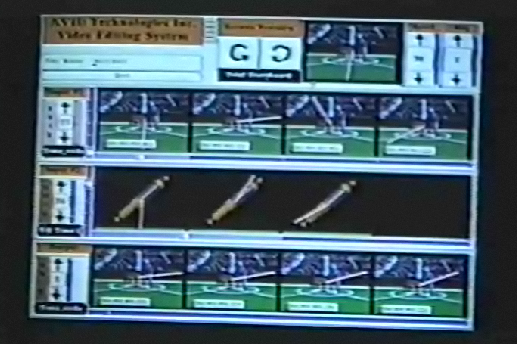
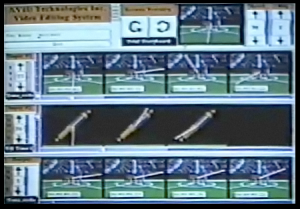
avid-prototype-2Bill Warner, Avid’s founder, has posted some fascinating early videos, from as far back as 1987, on the Viddler site. Several cover the earliest Avid prototype, a system that simply played a few clips and could assemble them together. Everything ran out of RAM — on an Apollo minicomputer. They had no way to digitize anything, so for testing they created short clips out of stills with a superimposed moving line to let you know something was changing.

It’s a real and raw look at the genesis of a system and metaphor that we all take for granted now. This early version didn’t have a source or record monitor or much of a timeline. But in Bill’s comments you already hear the idea of three-point editing and the distinction between an insert and an overwrite. In a strange twist, the prototype bears a certain conceptual resemblance to iMovie ’08.

For those of you who were part of the revolution back then there’s also a video featuring “The Visitor,” which we all used as practice material. A segment from a local news show and an early Avid promotional video are also included.

The videos are here. They’re in reverse chronological order — the oldest is last in the list.

Technorati Tags: , ,

Avid Sells Softimage to Autodesk

October 26, 2008

Avid announced a $66 million third quarter loss on Thursday, along with a “reduction in workforce” (that is, a layoff), and the sale of Softimage’s 3D compositing applications to Autodesk. When one-time charges are excluded, the quarterly loss was much smaller.

The details are in this press release and this Yahoo news story.

It’s not surprising that Avid has to make changes like this in the current economy, and frankly, I never saw how the Softimage 3D applications really fit in with the company’s overall strategy. But there are some key questions that were left unanswered in these news stories, namely how big the layoff was, and who was let go. Also not clarified: what’s happening with Avid DS. It appears that Avid will continue to develop the DS product line, but the press release was pretty vague.

Avid paid $268 million for Softimage in 1998. This week the sale price was $35 mil.

Technorati Tags: , , ,