We haven’t seen a new version of Final Cut Pro in over two years, and with Apple hiring new UI engineers not so long ago, rumors of a new version have cropped up repeatedly. Apple apparently showed off the new version recently and impressed some people. Mac Rumors breaks the news, here. And Larry Jordan mentions in on his blog, here. Nothing specific — just enough to whet your appetite, in classic Apple fashion. Steve Jobs’ competitive strategy has always been based on the idea that Apple has to aggressively lead, breaking old rules and creating new paradigms. Will this FCP do that? What would a new user interface look like? Will it offer a new interaction model to replace the old play-stop-adjust-play-stop-adjust cycle we’re all so used to? Multi-touch? Will it use modern CPUs and GPUs to speed things up the way Premiere does? And most important for those of us in the trenches — will it interface with current technology or force changes throughout the pipeline? Looks like we’ll be finding out soon.
Archive for the ‘Final Cut’ category
Final Cut Pro Rumors
February 23, 2011Does No Controller Mean More Control?
November 4, 2010 You’re going to be hearing a lot about Microsoft Kinect. This add-on to the XBox game console was released yesterday, and it’s getting a lot of positive press. David Pogue, writing for the NY Times, called it “astonishing.” ArsTechnica was a bit more restrained, saying that it’s a “cool piece of tech.” The system recognizes multiple people in front of it, tracks 48 different points on their bodies in 3D, and mimics their movements on screen. It also understands voice commands. There’s no physical controller at all. Pogue described a typical first-time experience as “a crazy, magical, omigosh rush.”
Editing is mostly stuck in the UI metaphors of the ’80s and ’90s. Mouse-driven, designed to make one adjustment at time, and focused around the cycle we all know too well: adjust something, press play to see what you did, stop, make another adjustment, play again.
Some applications work differently. In Pro Tools, for example, you can be playing in one place in the timeline and editing or adjusting levels further down. When you get there, you’ll be playing the changes you just made. Sony’s Vegas editing app is live, too. Even iTunes can play music while you do other things.
Avid, Apple and Adobe have been battling it out, of course, and the competition is good for all of us. But are any of them willing to jump off into hyperspace and change the paradigm? There have been many rumors about a new version of Final Cut, but precious little actual information.
We’re going through a big paradigm shift as we move to fully file-based environments. But the changes that will affect us as artists have to do with the way we interact with our tools — how well they respond to our creative choices in real time. One day, editing is going to feel a lot more like playing a musical instrument. Kinect will help catalyze those changes, putting development money and sales volume behind new interaction models. The same thing happened with high-powered, low-cost video boards, originally created for gaming and now powering editing applications.
But here’s the twist — we still need buttons. The Ars Technica review ended with a caveat, comparing the button-less interface of the Kinect to its less sophisticated competitors from Sony and Nintendo. “The Move and the Wiimote can do so much more when it comes to controlling games, and that’s because of one thing: buttons.” That applies even more to editing. The UI of the future is going to need both — buttons and gestures. And the ability to do more than one thing at a time.
Conforming Red
October 17, 2010 Red is now Hollywood’s great science experiment, with workflow options proliferating almost every day. How do you do dailies? How do you transcode and sync? Who is archiving your media? We’re finally starting to get our arms around those issues, but there are still too many options. And the bigger question now is how you conform.
“The Social Network” team actually did it in their offline cutting room, moving from Final Cut to Premiere and from there to After Effects, using EDLs (not XMLs) and dpx files (not the native R3D files). They then turned over to a Pablo for timing. (Adobe has posted a video laying this out.) I’m finishing a TV movie that was cut with Media Composer 5, conformed in Smoke and timed in Lustre using the native R3Ds, which gave us all kinds of color control. And those are just two of the dozens of permutations available. Before we started shooting, I spent a full week going over them, and at the end, the conversations were so filled with jargon that a normal mortal listening in would have thought we were nuts.
We do more and more visual effects work in our offline editing rooms. In television, I’ve gotten very spoiled seeing my work conformed perfectly using Symphony. There’s a tremendous sense of freedom in that — if you get something right, it’s finished and you never need to think about it again. But in features we don’t generally experience that particular thrill, because above HD resolution everything has to be rebuilt, and too often, by eye. Each system has its strengths and weaknesses. Smoke is powerful, interfaces with Lustre for timing and understands many MC4 effects — but MC5 is another story. Baselight understands XML (but not all effects). After Effects is cheap but doesn’t understand either one. And that’s just the tip of the iceberg.
The whole thing is a mess. Conforming complex visual effects by eye is crazy, and somebody is going to make real money straightening it all out. More fundamentally, will we be conforming in our cutting rooms or at a post house? Or will increases in processing power make the whole thing moot?
Meanwhile, be prepared for a new workflow on every show you do, with new options, new gotchas, and new things to learn each time.
Apple Said to Aim FCS at Prosumers
May 18, 2010AppleInsider is running a story that indicates Apple is re-targeting Final Cut Studio at home users and prosumers. The company has posted two job openings: for a Senior Visual Interface Designer and a Senior Human Interface Designer, both for Pro Apps. Key quote: “Apple’s Professional Applications Design Group is seeking a passionate senior human Interface designer who also understands the intricacies of non-linear video editing.” The remainder of the posting might imply that they are planning a wholesale reexamination of the FCP UI.
Not much hard evidence, but tantalizing, to say the least.
Final Cut User Group Videos
December 12, 2009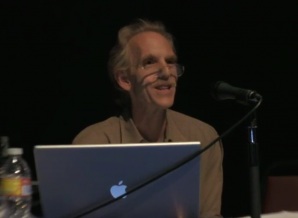 Video from the LA Final Cut Pro User Group meeting I spoke at is now available for download via the Open Television Network. The meeting covered new features in MC 4.0 and featured presentations from me, Walter Murch and Shane Ross. Details are in this post. The video has been divided into three parts, one for each of the presenters. It’s not free, but the prices are minimal and the quality is excellent. Go to the LAFCPUG page on the Open Television Network and enter your credit card information. Click the link to subscribe to the feed via iTunes. Buttons for all recent episodes will appear in the iTunes podcast page. Take a look at the free previews or download each segment in full. It sounds like a hassle, but it worked well for me and only took a minute or two. You’ll get a signup discount of $5, so watching all three parts will cost you a whopping $2.47.
Final Cut 7
July 23, 2009Well, it’s finally happened. Apple has released a new version of Final Cut Studio. As has become typical for Apple, the web pages explaining the new features are slick, well thought out and come with concise and well produced explanatory videos.
New features are described on this page. My personal favorites in FCP: slick integration with iChat theater for remote collaboration, background export, realtime audio filters, and multi-touch gesture support via a trackpad (including the ability to scrub the timeline). Other features, like the timecode window, speed change controls, more resolutions in ProRes, global transitions, and the ability to show SD title safe in HD material, seem like attempts to keep up with Media Composer.
The other aps in the suite offer lots of additional improvements, including the ability to burn regular and Blue-Ray DVDs from within Compressor, support for Euphonics control surfaces in Soundtrack, and many 3D and titling enhancements in Motion.
All-in-all it looks like an important upgrade, but perhaps a bit more evolutionary than revolutionary. The price has come down, too. It’s now $999.


 Splice Now
Recent Comments