Archive for the ‘Quality of Life’ category

Unintended Consequences

April 2, 2007

The law of unintended consequences has been the one constant in the whole digital revolution. We thought digital tools would give us our lives back and make the job easier. They made it harder. We thought it would take away the drudgery. It made assistant’s lives much more tedious. We thought it would make post production cheaper. It made it better, but more expensive. We thought new tools wouldn’t change the artistic qualities of our work. They did.

We weren’t so bad at predicting the technical future — it isn’t that hard to see what the effects of faster processors and bigger hard drives will be. But we really haven’t had much luck at predicting the social effects of this transition.

Today, the $64,000 question is how the democratization of our tools is going to affect us.

The argument goes like this: Now that you can edit on a laptop, it’s easier to gain access to the tools, easier to learn the job, and more people are going to do it. Editing is now widely understood to be critical to the filmmaking process, and partly because of Apple’s fantastic marketing, editing has become cool. That too is bringing people into the field. All of this means more competition.

The counter-argument is that quality always wins. Yes, anybody can learn to be a button pusher, but that doesn’t make him or her an editor. If you’ve looked at even a few student films you know this very well. And even if the size of the workforce is growing, the number of jobs is expanding, too — there’s more content out there everyday, and all of it needs to be edited.

Another concern is that editing work will move to foreign countries where wages are lower. You ship or or ftp the dailies overseas, you get cut material back. The counter-argument is that editing is a private, collaborative task and can only be done when director, producer and editor are near each other. Furthermore, piracy is a big issue. No serious filmmaker is going to trust a long distance editing arrangement.

So are our jobs safe these days? And if they’re not, what can we do about it? Most important, how do we improve the accuracy of our predictions? If we can’t see the future, we can’t prepare for it.
Technorati Tags: , , , ,

The Blackberry and the Editing Room

March 30, 2007

I’ve generally felt bad for folks who have to carry Blackberries. These people inevitably spend more and more of their time looking down at that little screen. No matter what they’re doing it can interrupt them. They lose a certain part of the lives.

But as an editor, I’ve come to enjoy working with producers and directors who are thumb typists. Why? Because when they work with me, they can communicate quietly.

Nobody can sit next to an editor and stay focused all day long. There’s just too much down time for the person who isn’t doing the work. In the old days that often meant the phone. Whoever was in the room with me was often talking, and a big part of my job was filtering out that talk so I could concentrate on the job. But with the Blackberry the talk goes away and is replaced by the subtle sound of little keys clicking. And that, folks, is a beautiful thing.

Technorati Tags: ,

The Best Editor on the Planet?

March 26, 2007

Is it me, or does this business of calling the machine the “editor” seem inappropriate to you? Last time I looked, editing was my job. The machine is a tool — a better tool, sure, but something that only works in the hands of a skilled and creative human being. Calling the machine the editor is like calling a hammer a carpenter or a pipe wrench a plumber.

Last year Avid added to the confusion by using the advertising tagline “the best editor on the planet.” I tend to agree with the sentiment — for me, the Media Composer remains the best piece of software for the work I do. But it’s a tool. We never called a Moviola or a KEM an editor. And we don’t call Photoshop a designer.

Maybe this use of the word has its origin at big facilities. If you’re dealing with 25 or 100 systems, buying them, upgrading them, making sure they work, then maybe you start calling them editors. You don’t really think about the people — as far as your balance sheet is concerned, the room and whatever is in it is indeed the editor.

In the early years of the digital revolution, the mantra of the entire industry was that the software was just a tool, a much better tool, sure, but something that only worked in the hands of a skilled and creative human being. Avid advanced that perspective very consistently. The Media Composer will allow you to be more creative. It can’t edit for you, you don’t want it to do that and we don’t claim that it can. It won’t put you out of a job.

Today, Avid marketing seems to have forgotten that fundamental point. To me, and I’ll wager, to a lot of people like me, calling the machine the editor is at best tone deaf and at worst, downright disrespectful. As we ramp up to this year’s NAB, I hope that Avid retires that tagline as soon as possible.

Technorati Tags: , , ,

Best News of the Week

March 24, 2007

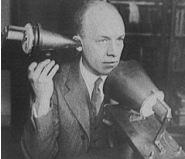
Old TelephoneThe FCC decided Thursday that, for now, it won’t permit cellphones to be used on airplanes (NY Times, CNET). Hallelujah! Let’s declare a national holiday! I’ve been seriously wondering whether I’d be able to keep flying with everybody around me shouting into their phones. Apparently 8,300 people weighed in with letters to the FCC begging them to forbid this practice, but the decision, naturally, was made on technical grounds.

We humans are very skilled at directing our voices to the listener. We modulate volume with great precision and we unconsciously aim our voices at the person we’re addressing. But all that skill is lost when we talk into a cell phone. Even thought the listener’s ear is effectively just a inch or two away from our mouths, we generally speak quite loudly. Every time I see somebody doing this I think of people in the early part of this century cranking the little dynamo on their old phones and projecting into the mouthpiece. “Hello?! Hello?!”

In part, this phenomenon has to do with how your voice is played back into your own earpiece — something that early telephone engineers realized was essential to keep people from yelling and which they dubbed sidetone. Some cellphones apparently still don’t produce sidetone. The FCC ought to ban them immediately as a public health hazard.

Call me crazy, but In the meantime, I tend to walk up to the nearest shouter and, very politely, let them know that they are talking too loud. If you’re nice about it, this can work. Shouting is an involuntary reflex and, when made aware of it, some people will respond with embarrassment and make an adjustment.

Technorati Tags:

The Fear

March 23, 2007

I’ve been working as an editor for a long time now and I’ve always felt that the film business was more or less recession-proof. When the economy got bad people generally watched more movies and television. No matter what was happening to other businesses, Hollywood always did okay.

But today things don’t look so great. Below-the-line wages are down. In post production, this is partly because so many new people are entering the field. Editing has come out of the closet and has become, dare I say it, glamorous, to many people. This is a wonderful thing, but it brings with it increased competition, which inevitably puts downward pressure on wages. Even worse, there seems to be an across the board attempt on the part of many producers to lower below-the-line wages. And that’s hurting everybody.

But the real issue, the real monster in the closet, is the growth of the Internet as a video distribution medium. Nobody knows how this is going to shake out. The result is a pervasive sense of unease on the part of everybody in established media, from the lowliest messenger to the most powerful mogul, from newspapers to radio to television to film. What’s coming? What part of my business model is about to crumble? How do I prepare for it? And will I have a job when the dust settles? Nobody is immune.

This week we saw the release of the Apple TV, (reviewed in the NY Times by David Pogue), and yesterday NBC & News Corp. announced a big advertising-sponsored deal to distribute their content on the web.

We’re heading toward a world where you’ll be able to watch just about any video that was ever made and do so literally anywhere and any time you like. And that’s rocking our world in a way that’s never been felt before. It’s empowering a whole new group of filmmakers and entrepreneurs, and it’s scaring the bejesus out of everybody else.

Technorati Tags: ,

Incomprehensible Medical Bills

February 28, 2007

Reforming health insurance, once seen as the third rail in American politics, is back in vogue again. John Edwards described his plan in detail recently, something few other politicians have been willing to do, and Paul Krugman reviewed it quite positively in a recent column.

One thing that is rarely mentioned, though, by Democrats or Republicans, is much less expensive and much more pervasive — the fact that medical bills are darn near incomprehensible. And that makes it impossible for the consumer to exercise any kind of reasonable control.

There’s the “list price,” which nobody actually pays, the negotiated price, the provider discount, the plan discount. There’s the doctor fee, the lab fee, the hospital charge, equipment charges and various extras, mostly listed in the most generic language possible. There are multiple bills, each with their own subset of these costs, some of which overlap. “Explanation of benefit” forms often don’t even mention the doctor’s name.

Bottom line? Medical services are the only thing we buy for which we don’t understand the bill and for which we don’t know the price in advance. Can you imagine buying a TV that way? You’re browsing at Circuit City and the salesman says, “This HD model is fantastic. Great picture! We’ll be happy to load it into your car — and once you get it home and installed we’ll tell you how much it costs! All you have to do is sign this little piece of paper indicating that you are legally responsible for payment. Do we have a deal?”

But, imagine if it was different. Imagine that every doctor was required to tell you what a service or test was going to cost — before it was performed. Or imagine an even simpler change: a requirement that all medical bills and explanation of benefit forms forms itemize in plain English what services were performed and by whom.

Either or both of these things would give consumers all kinds of power. You’d be able to compare diagnoses, services and prices. And you’d be able to check the bill and the insurance payments and catch mistakes.

We’ve certainly got the computer power in place to make this happen. So what’s stopping it? I don’t know, but my intuition is that both the doctor and the insurance company, each for their own reasons, wants us to remain in the dark. Nobody’s pushing for clarity so clarity doesn’t happen.